
Drooping Eyelids: Is Eyelid Surgery the Only Option?
CO2 Laser Resurfacing For Hooded Eyelids
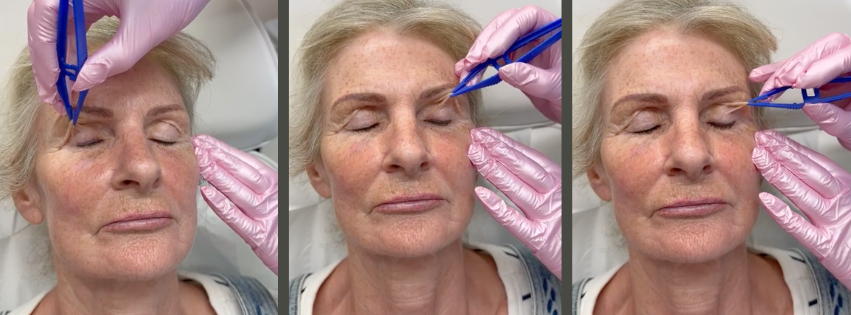
Is Eyelid Surgery the Only Option? NO!
Have you noticed that your eyelids seem heavier than they used to?
Perhaps applying eye make-up has become more difficult, your upper eyelid crease is disappearing, or you constantly feel as though your eyes look tired even when you have had plenty of sleep.
Drooping or hooded eyelids can affect people far more than you might think. For some it is simply an aesthetic concern, but for others the excess skin can create a feeling of heaviness.
Why do our eyelids begin to droop?
The skin around our eyes is extremely delicate, and unfortunately it is one of the first areas where the signs of ageing can become noticeable.
As we get older, our skin naturally produces less collagen and elastin. These are two of the important components that help skin retain its firmness, strength and ability to spring back into position.
Over time, the connective tissues around the eye weaken, and the skin gradually loses elasticity. Gravity, genetics, sun exposure and the natural ageing process can all contribute to the loose, redundant skin known medically as dermatochalasis.
This can create that familiar hooded appearance above the eyes.
It is important, however, to distinguish loose eyelid skin from true ptosis. Ptosis occurs when the actual upper eyelid margin sits lower than it should, sometimes because of changes in the structures responsible for lifting the eyelid. This is why a proper consultation and assessment are so important before deciding on any treatment.
What do people try first?
Unsurprisingly, many people start looking for non-surgical solutions long before they consider having any other procedure.
You may have seen face yoga exercises specifically concentrating on the eye area. These usually involve repeatedly lifting, opening or contracting the muscles around the eyes with the idea of strengthening them.
Others turn to creams and eye products promising a tightening or lifting effect.
And then there are those tiny adhesive eyelid strips or tapes that are positioned inside the natural eyelid crease. When applied correctly, they can temporarily push loose skin upwards and create the appearance of a more defined eyelid. They can provide a short-term cosmetic difference, but they haven't actually changed the underlying laxity of the skin.
And eventually many people reach the point where they start researching eyelid surgery.
Is eyelid surgery the only solution?
Blepharoplasty is the surgical procedure commonly used to remove excess upper eyelid skin, and for significant dermatochalasis, it can be a very effective treatment.
But surgery isn't necessarily the first option for everybody.
Some people simply don't feel ready for surgery. Others may have mild to moderate skin laxity and want to explore less invasive treatments before considering an operation.
And this is where CO₂ laser resurfacing can be worth discussing.
What is CO₂ laser resurfacing?
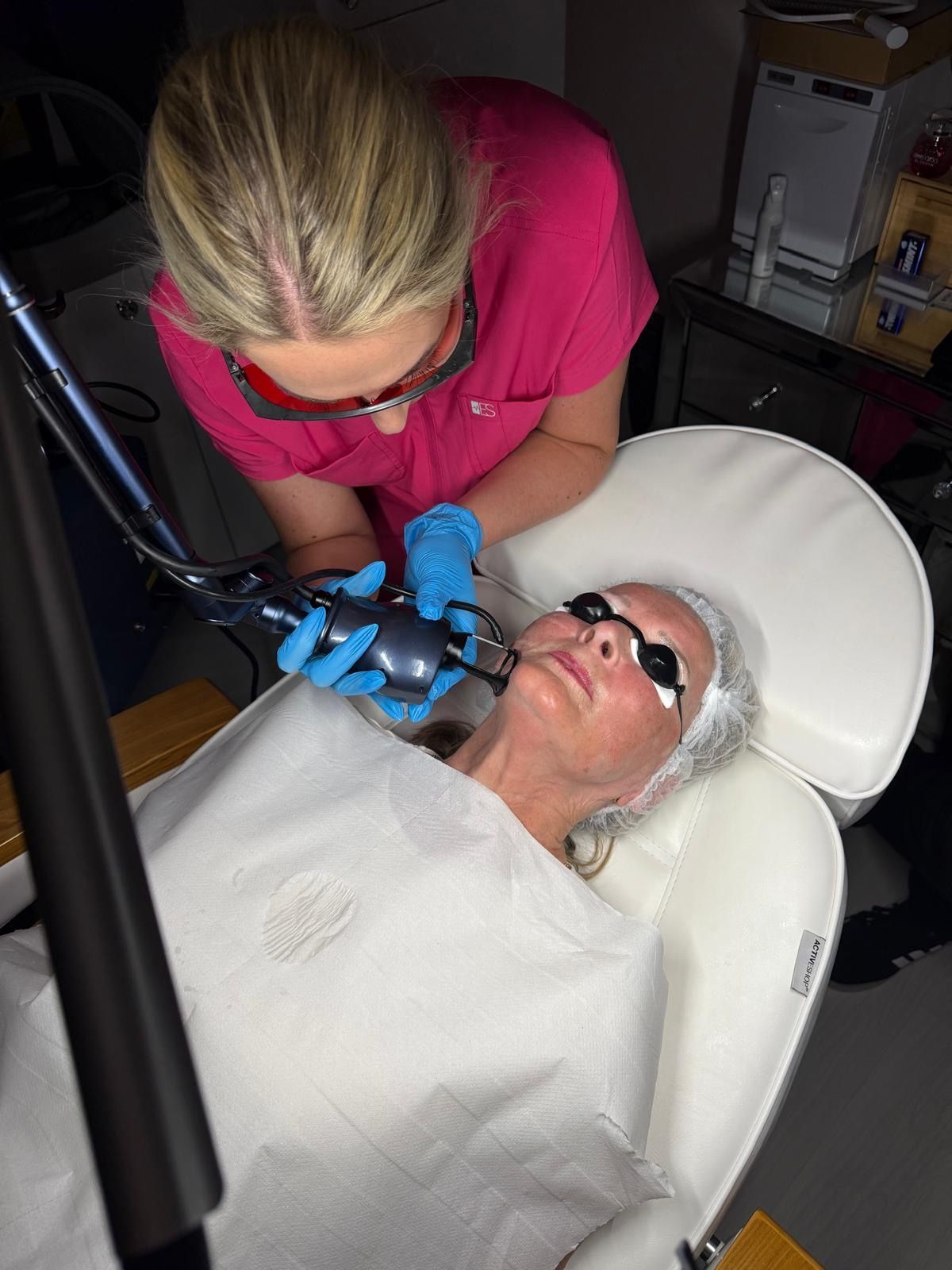
CO₂ laser resurfacing uses controlled laser energy to treat the skin.
With ablative resurfacing, laser energy removes microscopic areas of damaged surface skin while also heating the deeper dermal layers. That controlled thermal effect stimulates the skin's healing response and encourages collagen production. As healing takes place, skin texture can become smoother and the treated skin can become firmer and tighter.
When fractional laser CO₂ technology is used, only fractions of the skin are treated at one time, leaving surrounding areas of untreated tissue to assist the healing process.
Around the eyes, treatment can therefore be used to target some of the very things that cause an ageing eye area:
- loose or crepey skin
- fine lines
- wrinkles
- uneven texture and mild to moderate laxity
Research specifically examining fractional laser CO₂ treatment around the eyes has found improvements in eyelid skin tightening, wrinkles and skin texture. One prospective study involving 100 people with periocular ageing found improvements in wrinkles and skin laxity following CO₂ laser resurfacing treatment, with some participants also showing a small elevation of the eyebrow area. Another study examining upper and lower eyelid treatment found measurable improvements in eyelid laxity following fractional ablative CO₂ treatment.
Could CO₂ laser treatment mean avoiding surgery?
For the right person, CO₂ laser resurfacing can offer an alternative worth considering before surgery.
But we would never suggest that CO₂ laser treatment can replace a blepharoplasty in every case.
If there is a significant amount of excess skin, substantial fat protrusion, true eyelid ptosis or the eyelid is beginning to interfere with vision, surgery or specialist ophthalmic assessment may still be the more appropriate route.
CO₂ laser resurfacing is particularly interesting for people whose main problem is age-related skin laxity and crepey skin around the eyes, rather than a structural problem with the eyelid itself.
There is published evidence describing fractional ablative CO₂ laser resurfacing as a potential alternative to traditional blepharoplasty in appropriately selected patients, but the best treatment depends very much on the underlying cause and degree of laxity.
Before automatically deciding that surgery is your only option we believe you should have a consultation to see if you would be a suitable candidate for CO₂ laser resurfacing.
Why autumn is such a good time for CO₂ laser resurfacing
If CO₂ laser resurfacing is something you have been thinking about, autumn is one of the most practical times of year to start discussing it.
After CO₂ laser resurfacing, newly treated skin needs to be protected extremely carefully from UV exposure. Excessive sun exposure before or after treatment can increase the risk of pigment changes, and consistent sun protection is an important part of recovery.
During autumn and winter, we naturally tend to spend less time sitting outside in strong sunshine, which can make post-treatment care easier than during the height of summer.
It is also a time of year when many people find it easier to accommodate a period of redness, swelling, peeling or downtime while the skin heals. And because collagen remodelling is gradual, having treatment during the cooler months gives your skin time to continue improving over the following weeks and months.
Before you decide on eyelid surgery, have a conversation
If your eyelids are beginning to feel heavy, hooded or crepey, don't automatically assume that surgery is your only option.
The first step is understanding why your eyelids have changed.
- Is it loose skin?
- Is it loss of elasticity?
- Is there true ptosis?
- Or is there a combination of different age-related changes happening around the eye?
Once we have assessed what is actually going on, we can talk honestly about whether CO₂ laser resurfacing could be suitable for you.
Sometimes surgery will still be the right answer.
But for some people, there may be another option to explore first.
Thinking about CO₂ laser resurfacing for your eyelids?
Get 20% off your first treatment this October!
Offer available during October only and subject to terms and conditions. Suitability for treatment will be assessed during the consultation.
Book a consultation at M&M Aesthetics & Skincare and let us assess your eye area properly before you decide what to do next.
Do you have questions?
Mel x